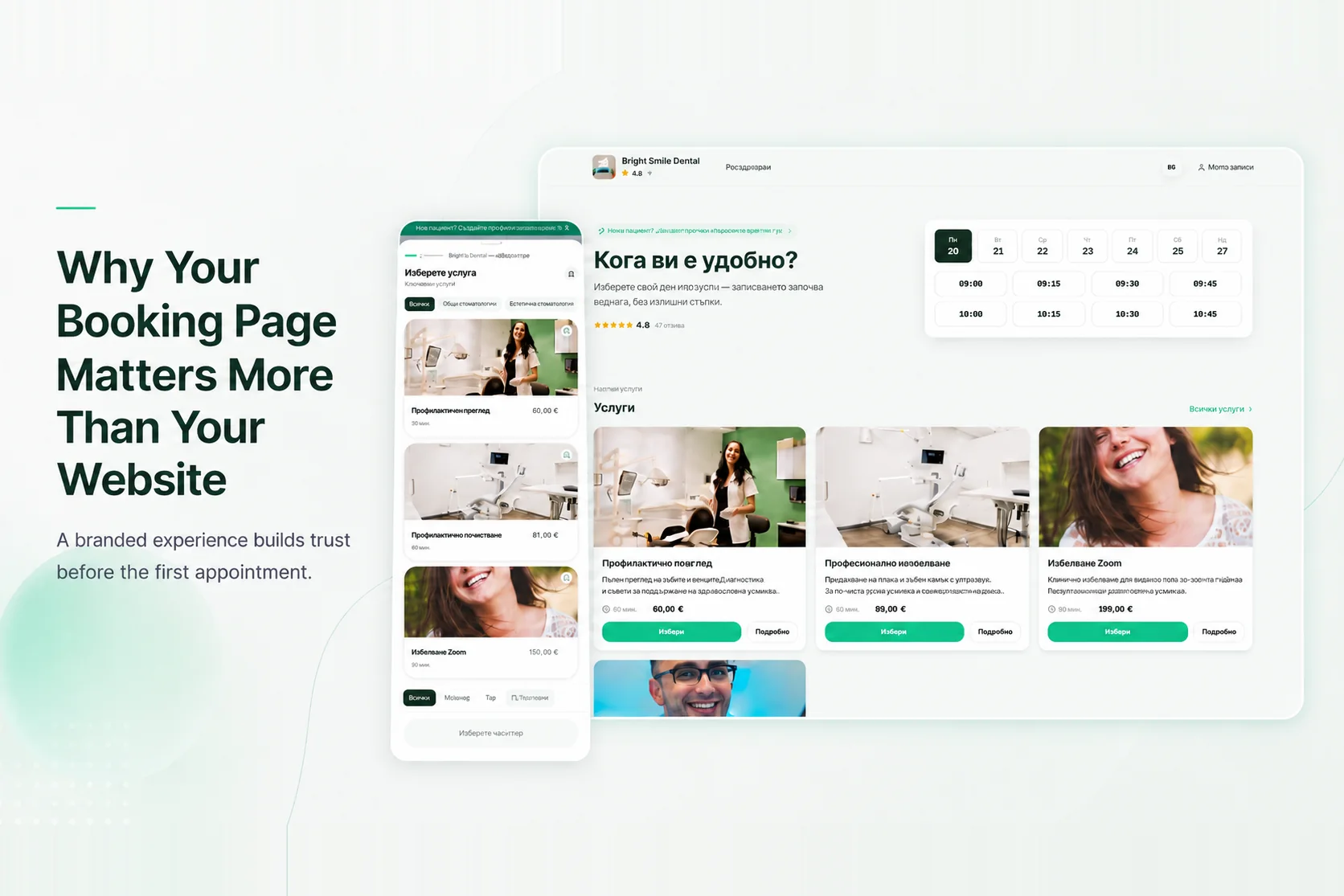
Why Your Booking Page Matters More Than Your Website
For a service business, the booking page — not the website — is where a visitor becomes a customer. Here's why a branded, low-friction online booking page wins more appointments, and how to build one.
On this page
Most businesses spend weeks on their website.
They pick the fonts, argue about the hero image, rewrite the “About” page three times.
Then a visitor arrives, scrolls, likes what they see — and clicks Book.
And in that second, the website stops mattering.
Everything now depends on a different screen: the booking page. That is where interest turns into a confirmed appointment, or quietly disappears.
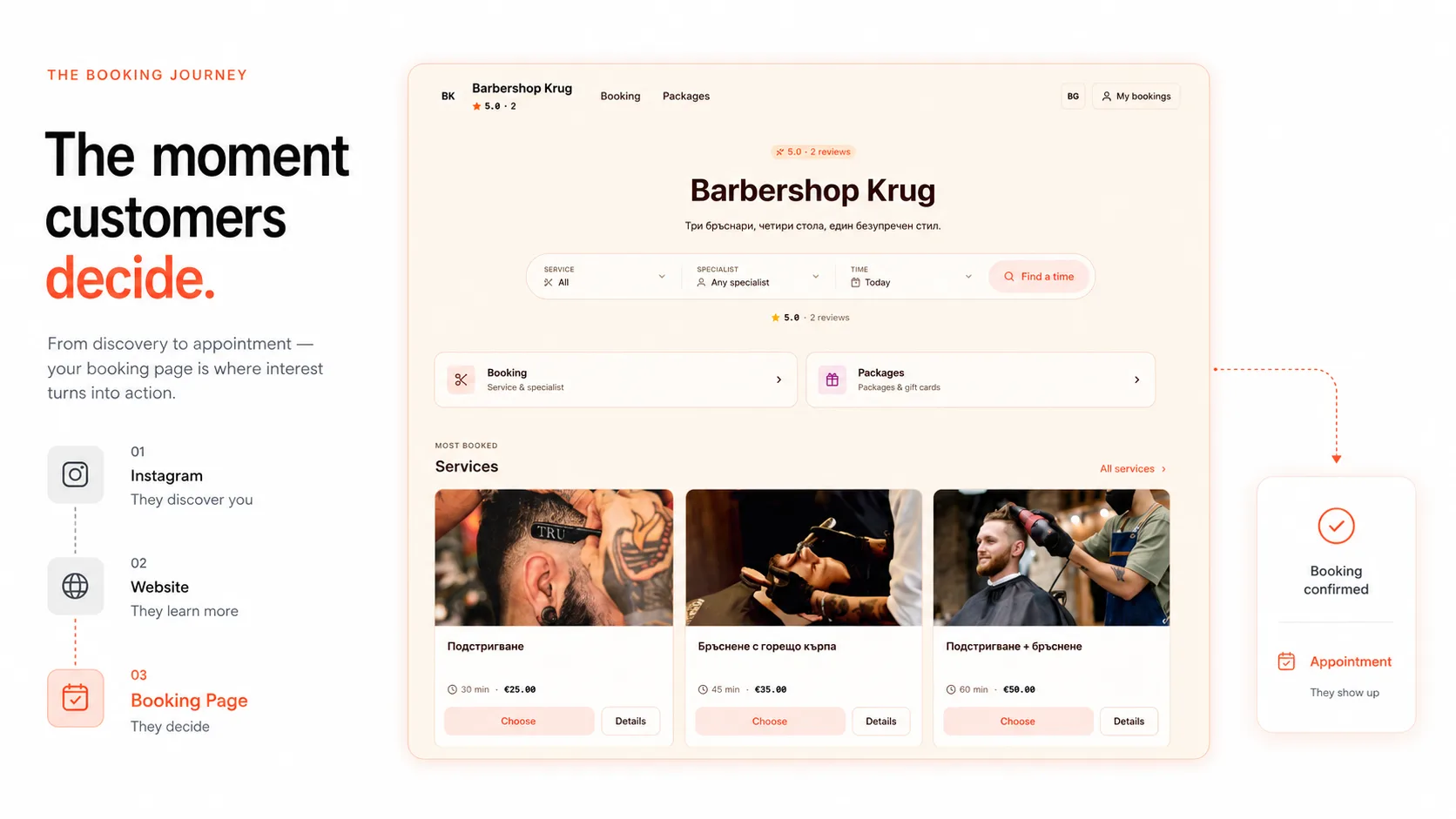
The website introduces. The booking page convinces.
A website helps someone get to know you. It sets the mood, shows your work, and answers the first questions.
The booking page helps them decide.
That is a completely different job. On the booking page, a customer:
- picks the service they want;
- compares specialists;
- checks the price;
- looks for a time that fits their day;
- and confirms.
Each of those is a small decision. Put together, they are the actual sale. You can have a beautiful website and still lose the appointment at any one of these steps — a missing price, an unclear specialist, no available time that works, one form field too many.
This is why the booking page deserves at least as much care as the homepage. In practice it usually gets far less.
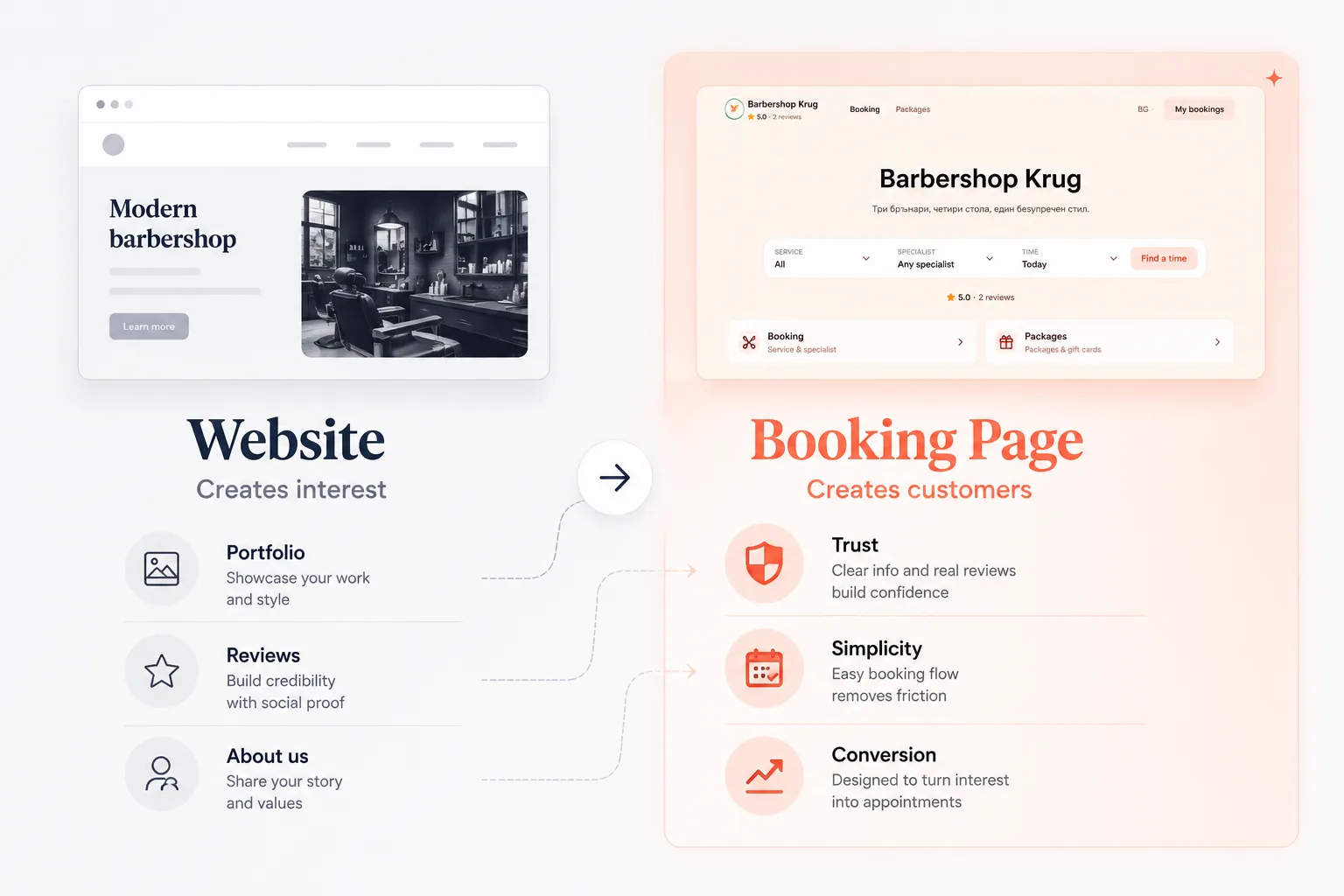
Most booking systems look the same — and that’s the problem
Here is a moment that happens thousands of times a day.
A customer discovers a polished, high-end salon on Instagram. Beautiful photos, strong reviews, a clear brand. They tap Book — and land on a plain gray form hosted by some scheduling tool, with a different logo, different colors, and a layout they’ve seen on ten unrelated businesses.
For a second, the customer stops looking at your business and starts looking at software.
Nothing is technically broken. But something in the experience quietly drops. The confidence your photos and reviews just built now has to survive a page that feels like it belongs to someone else.
A branded booking page keeps that confidence intact. Same colors, same tone, same photography, same feeling — from the first Instagram tap to the confirmation screen.
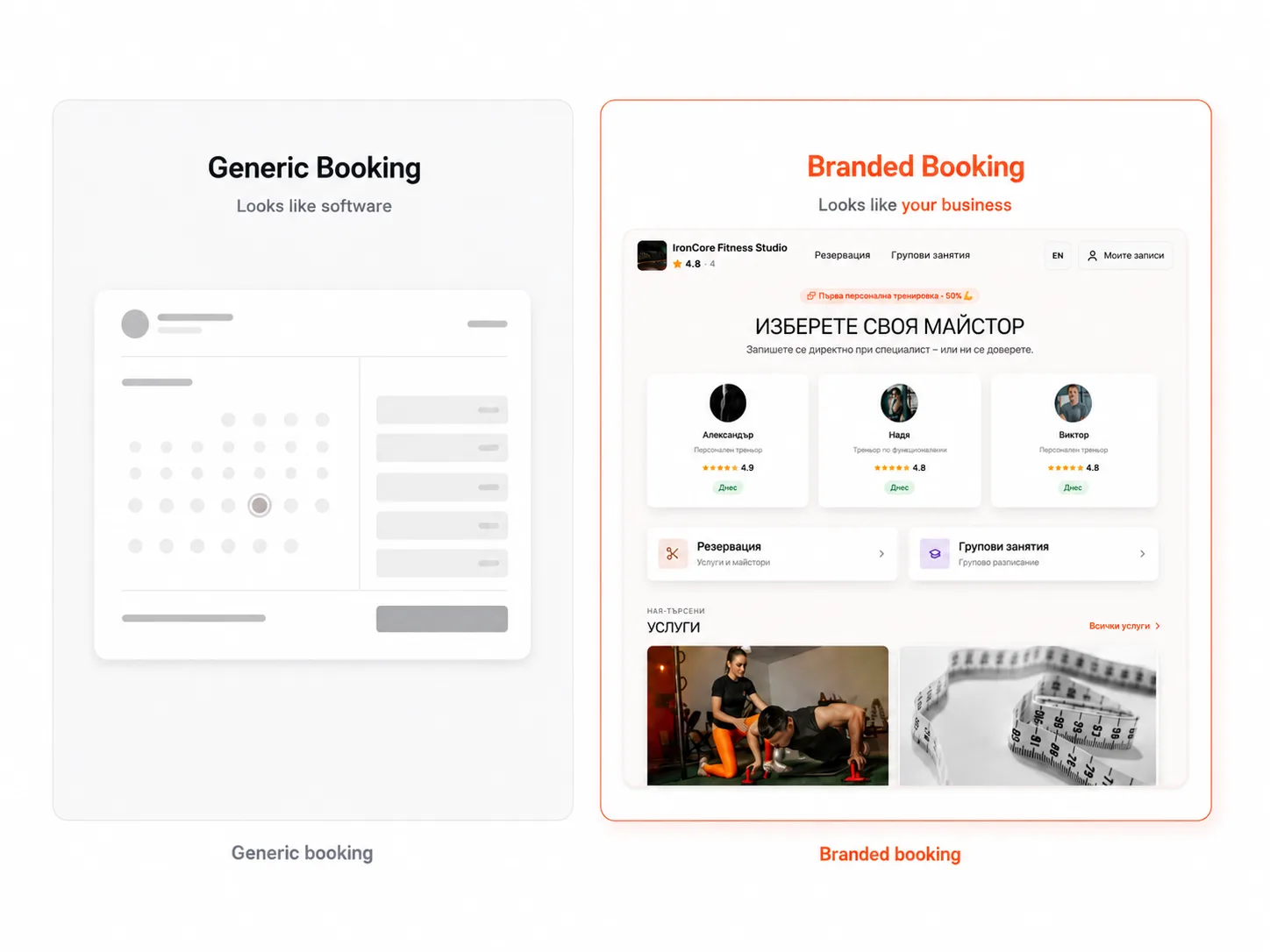
Customers don’t buy a calendar — they buy trust
An empty time slot has no value on its own.
What a customer is really buying is confidence: that this is the right place, the right specialist, the right level of quality. They are booking an experience, and the booking page is a preview of it.
So the page should continue the story your brand already started — not interrupt it with a generic system screen. A few things carry most of that trust:
- Your look and feel. Colors, fonts, and imagery that match your brand, not a template. Mountify handles this with ready-made moods and themes and a live preview, so the page feels designed without a design project.
- Real photos of your work. Page photos and a gallery, plus images on individual services, do more for trust than any amount of copy.
- Clear, honest services and prices. A well-described service with a real price removes the biggest hesitation before someone commits.
- Real availability. The times shown must be times you can actually deliver. Mountify calculates availability from working hours, staff schedules, existing bookings, and required resources — so a customer never picks a slot that isn’t really free.
None of this is decoration. It’s the difference between “this looks trustworthy” and “let me think about it.”
Simplicity is part of your brand, too
The best interfaces are almost invisible. Nobody admires them — they just work, and the customer barely notices booking at all.
That usually comes down to a short, obvious path:
- Choose a service.
- Choose a specialist.
- Choose a time.
- Confirm.
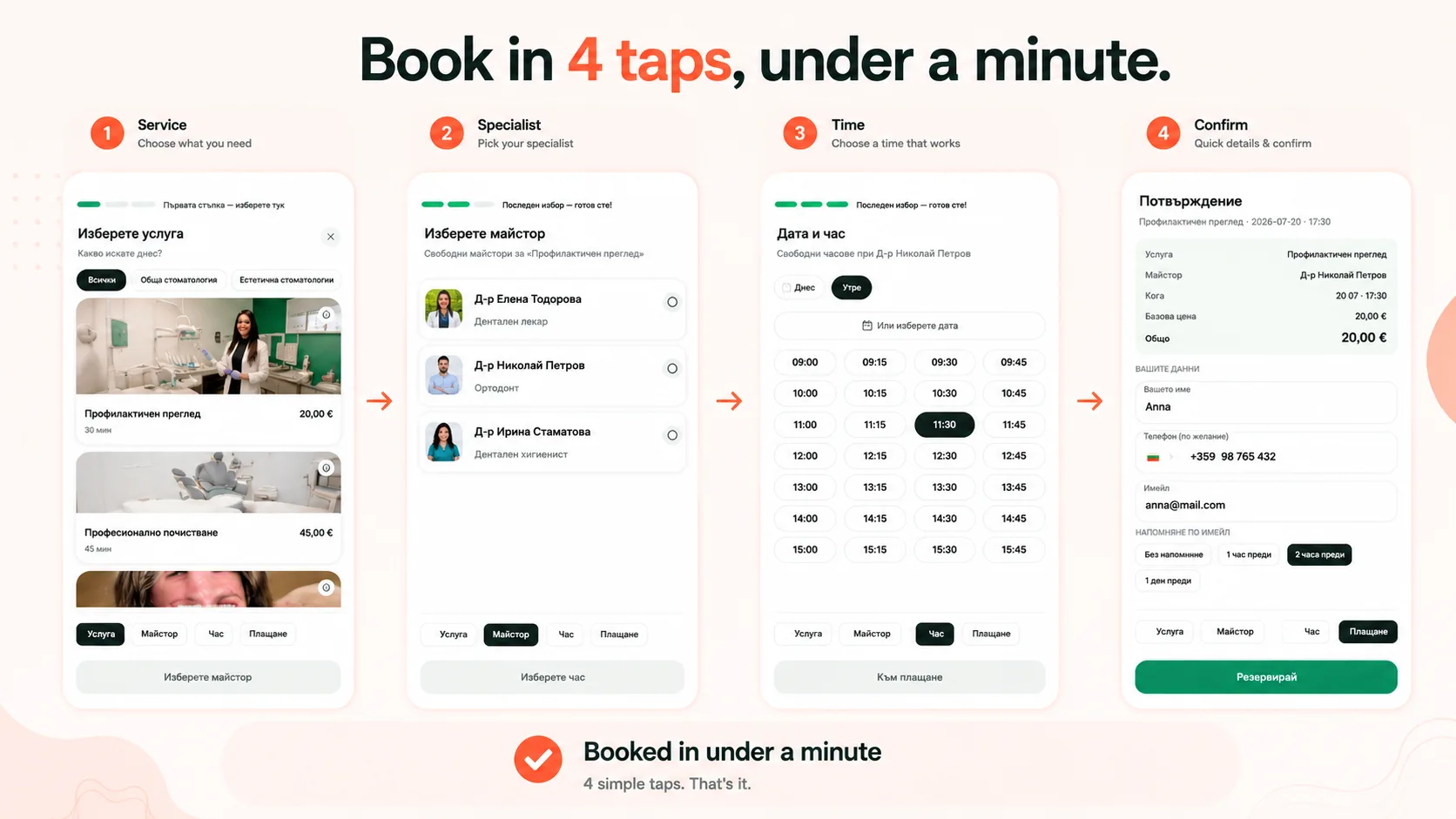
Every extra step, every unexpected screen, every field that isn’t strictly needed is a place where a ready customer quietly leaves. Less friction means more completed bookings — it really is that direct.
And when the flow is this clean, you can share it anywhere it makes sense. One link works from Instagram, Google, WhatsApp, and a QR code, or embedded straight into an existing website. The booking page becomes the single destination behind every “Book now.”
A quick audit of your booking page
Open your own booking page on your phone, as a first-time customer would, and ask:
- Is it instantly clear whose business this is?
- Does it look and feel like your brand — or like generic software?
- Is it obvious how to choose a service?
- Are the prices and available times clear and honest?
- Could you finish a booking in under a minute?
- Would you want to complete this booking?
If any answer is a hesitation, that hesitation is costing you appointments — every day, silently.
Your booking page is your business — not software
A beautiful website helps people discover you. But it’s the booking page that turns interest into action.
So it shouldn’t feel like a scheduling tool that happens to have your name on it.
It should feel like your business — all the way to “Booking confirmed.”
That is exactly what Mountify is built for: a public booking page that carries your brand, presents your services, shows real availability, and takes a customer from interested to booked in under a minute — while the calendar, reminders, and payments run quietly behind it.
Ready to create a booking page that feels like your brand?
Frequently asked questions
Is a booking page more important than a website?
For most service businesses, yes — at the moment of decision. The website builds interest, but the booking page is where the visitor actually commits: chooses a service, picks a specialist, checks the price and time, and confirms. A great website with a confusing booking step still loses the appointment.
What makes a good booking page?
It looks like the business it belongs to, explains the services clearly, shows real availability, works perfectly on a phone, and lets someone book in under a minute. Brand consistency and low friction matter more than the number of features on the page.
Do I need a website to accept online bookings?
No. A booking platform can give you a complete public page that you share from Instagram, Google Business Profile, WhatsApp, and QR codes. If you already have a website, the booking experience can be embedded or opened through a dedicated button.
Why does branding the booking page matter?
The booking page is often the first real interaction a customer has with your business after discovering you. A generic form that looks like someone else’s software breaks the impression your photos, reviews, and prices just built. A branded page keeps the trust intact all the way to the confirmation.
How do I make my booking page convert better?
Reduce friction and reinforce trust: a clear service list, honest prices, real available times, a short path to confirmation, and a design that matches your brand. Every extra step, unclear label, or unexpected screen is a place where a ready customer quietly leaves.